
Behind "Romeo's Burden"
How 2 guys made a very short movie about an ex-racehorse and his handler

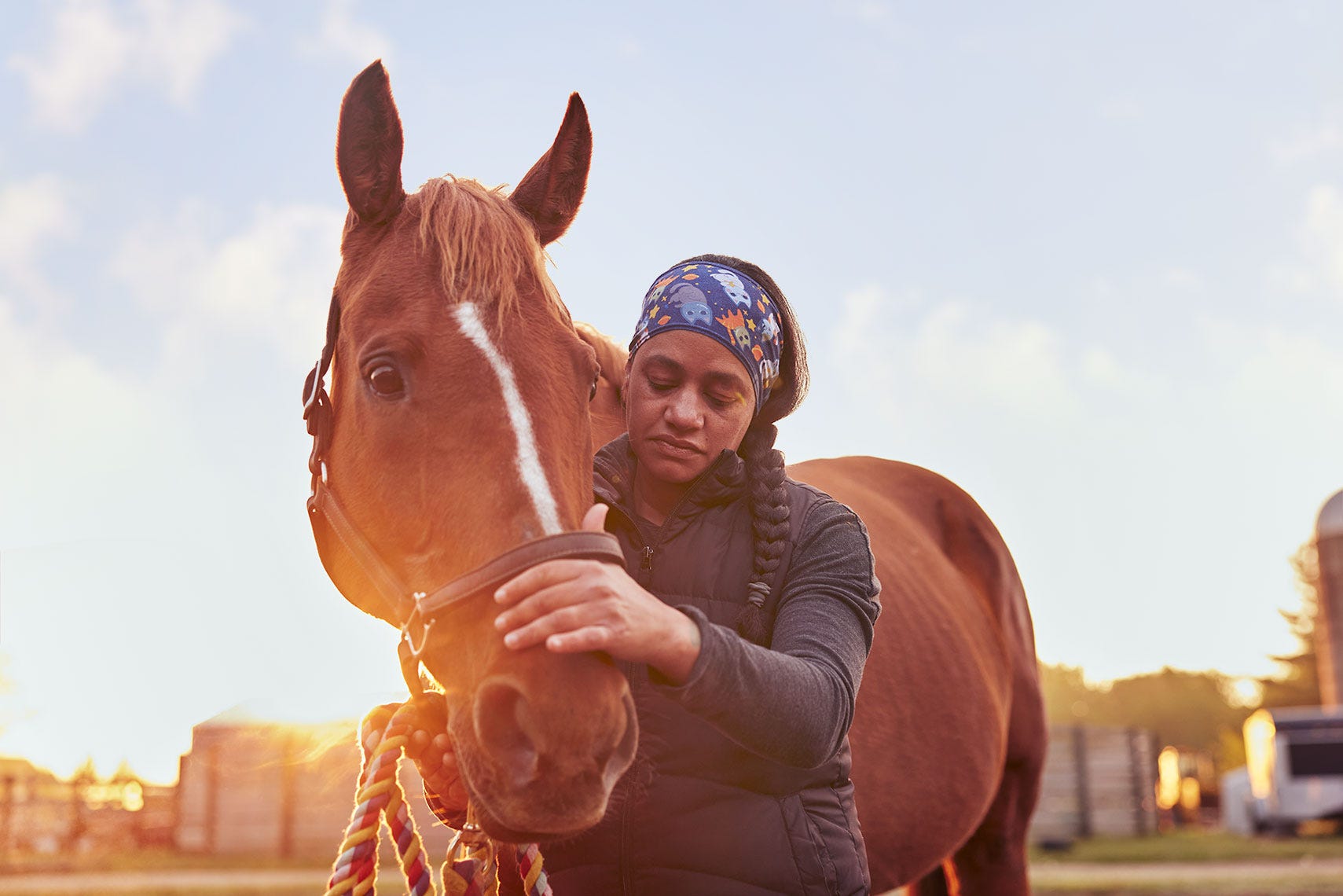
OK, OK — not like, a Hollywood movie.
No Marvel blockbusters here.
But watch this six-minute documentary short I just released, called Romeo’s Burden, and maybe you’ll agree: Monique Valentine has superpowers.
I first heard about so-called “equine bodywork” back in 2022. Saw a posting somewhere, someone offering such services. Interesting, I thought, then moved on with whatever I was doing.
But I’ve heard it said that the ideas worth pursuing are the ones that stick with you. This one sure did.
So, one day in late 2023, I finally caved to my own curiosity. What exactly was “equine bodywork”? And who was doing it?
Digging deeper
Turns out, it’s a therapeutic practice that uses massage, stretching, and other hands-on techniques to help a horse’s physical well-being, mobility, and performance.
It sounded intriguing. I wondered what it looked like. Could this be a video project? At the time, I imagined something moody—stirring music, insightful b-roll, no dialogue.
I found a couple of equine bodyworkers in my region.
The first seemed highly experienced, so I reached out. Crickets. Months passed. Calls and emails unanswered. Project shelved.
Then, in spring 2024, fresh off a string of travel gigs, I felt the urge to make something purely out of my own curiosity.
I rang Monique. She answered.
She graciously shared her practice, her process, the why behind what she does. It was fascinating. We set a date for me to observe her working with a new horse — one she’d never met before: Romeo, an ex-racehorse.
These bodywork sessions unfold in the smallest of ways — in twitches of the skin, flickering eyelids, a slight shift in weight. To the untrained eye, it might seem like nothing is happening. But to Monique, every blink, breath and subtle release tells a story.
She warned me: Sessions like these are unpredictable. When, where, and how a horse responds is impossible to guess. In fact, she cautioned, Romeo might not be into the session at all.
When scout day came, I woke at 4 a.m., grabbed my Canon R5 (silent electronic shutter — so I wouldn’t disturb Monique or the horse), and hit the road to a farm up north.
I only planned to make some snapshots. But what unfolded before me — Monique’s peaceful, sensitive way with Romeo, the flickering sunlight — was too good to pass up.
Onward (slowly)
I left that two-hour session having witnessed something spiritual. Something incredible. And with a set of stills that suddenly felt like a project in their own right.
Over coffee later that week, I showed the images to cinematographer Jason John Jahnke. Jason has a way of noticing things. Finding beauty in the mundane. He seemed like a perfect partner for a project like this. Would he like to team up?
He was in.
Monique was still a bit unsure.
“Are people really going to care about this?” she’d ask.
And she’d say: “I don’t know. It can be really slow, and there’s not much to see.”
She even offered to connect me with other equine bodyworkers who had many more years of experience.
“Not a chance,” I’d think to myself, as I’d let her air her uncertainties. “You are amazing.”
Monique — easygoing, self-effacing, lacking any and all ego yet confident in her craft — was clearly the real deal.
A few weeks later, Jason popped out to the farm with me one day to meet Monique and so we could conduct a quick tech scout. Overall, though, we agreed the plan had to be loose and more focused on aesthetic rules than a specific shot list. Romeo would be in the driver’s seat.
Within a few months, we had a shoot date.
Halloween, actually.
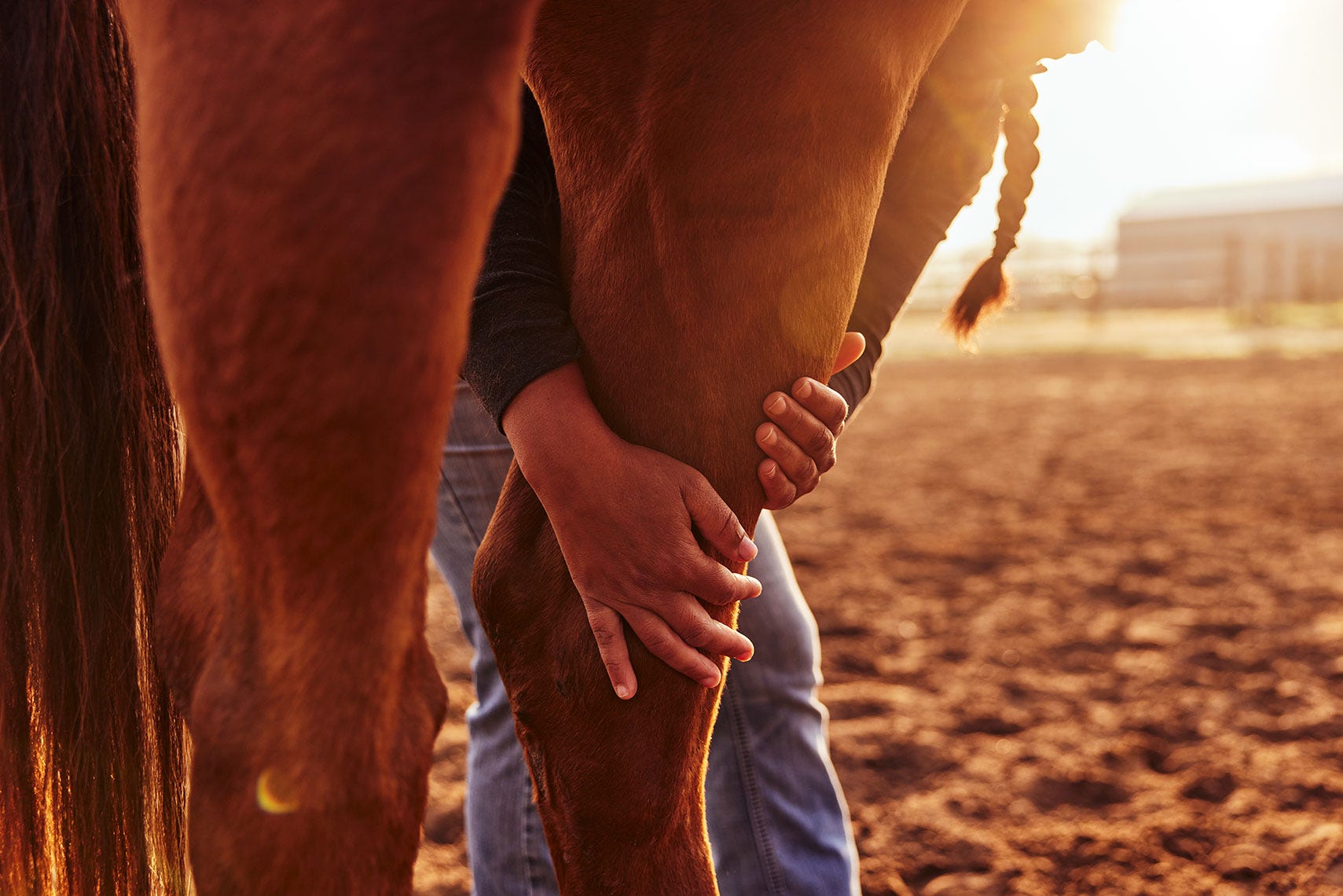
Shoot day… at last
In total darkness, we arrived at the farm.
No crew. No grip truck. Not even a bounce board.
Just a director and a DP.
A horse and a trainer.
As I built out my director’s monitor and Teradek wireless system, Jason prepped the camera package. We’d decided to shoot with a diminutive camera and a large, heavy rehoused 65-year-old zoom lens. (More tech specs later.)
We mic’d Monique with a lav and followed her as she went to fetch Romeo.
As dawn broke in the eastern sky, we walked with Monique and Romeo to the arena.
She’d been hesitant about how this all would unfold. I’d played it close to the vest. And here’s why: That first visit to the farm, she’d so eloquently spoken about her craft and every move she made. An almost perfect narration.
My hope was that she’d deliver a similarly beautiful talk on her work — and feel at ease — if I gently asked her to tell Jason what she was doing and why, just like she had for me.
In short: It worked.
There were those moments during the shoot when Monique would say something and Romeo would behave in a way that supported it and Jason and I would share a glance of WOW.
I’ll let you decide how it worked out in the end. Hope you’ll have a watch and share your thoughts in one way or another.
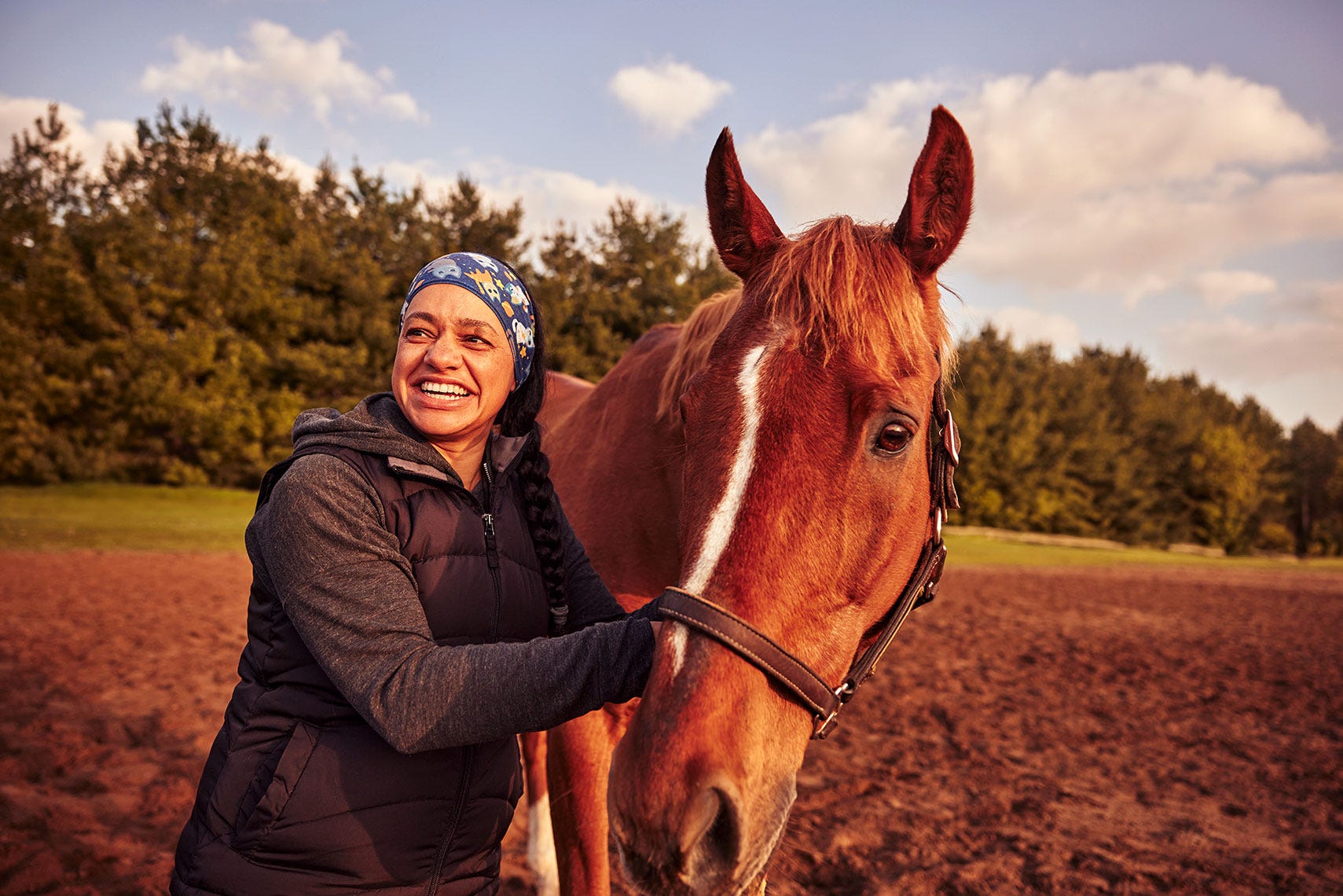
Annnnnd… for the gear heads
We shot on the tiny but powerful Blackmagic Pocket Cinema Camera 6K Pro.
We wanted full frame, open gate RAW and internal NDs in an unassuming camera body that wouldn’t catch much attention from Romeo or Monqiue.
Our one concession on size was the lens: This was shot entirely on a rehoused Voigtlander Zoomar 36-82 T3.1 lens. The thing’s not long, but it’s a cannonball. And it was originally introduced in 1959. This one was rehoused by GL Optics sometime in the last 20 years.
I was familiar generally with the Pocket Cinema cameras; they’re useful gag/crash cams. Was impressed with its performance. We certainly considered the Alexa Mini LF, but with so much left to chance and such a short shooting window — 90 minutes on the long side — we said let’s take a chance. And we didn’t regret it.